WITNESS TO THE NEW WORLD OF FAITH:
A Pastoral Letter to the Family of God in Los Angeles
on the New Evangelization and our Missionary Call
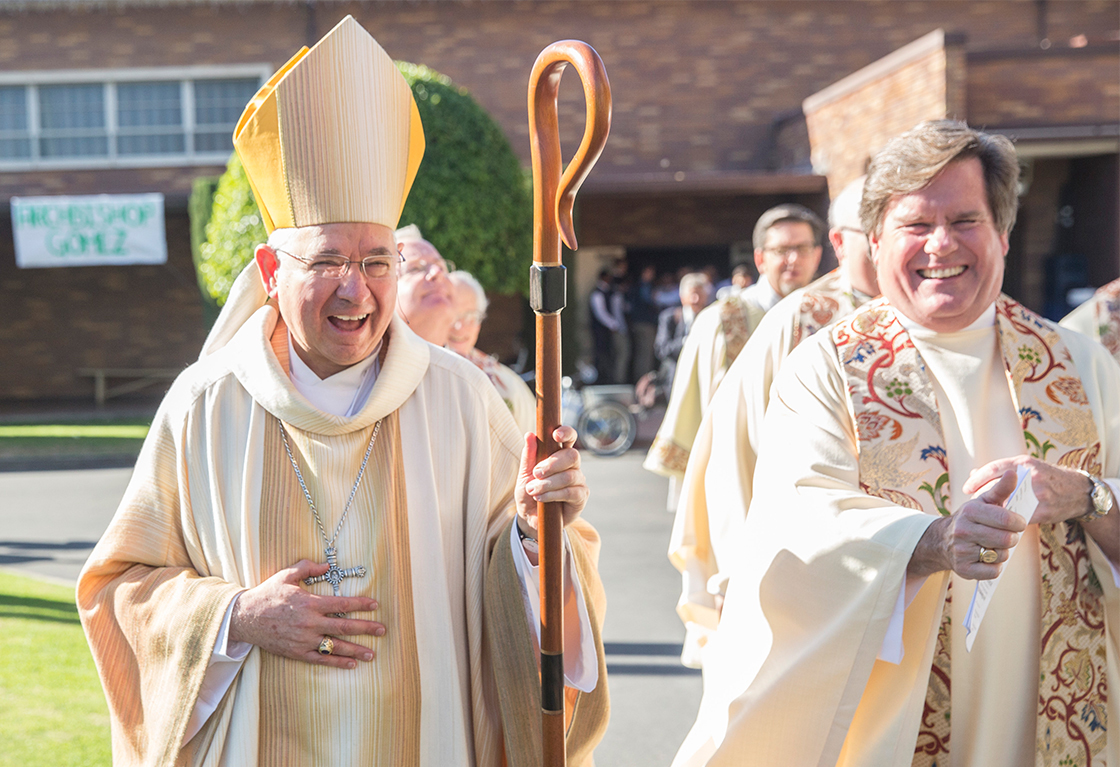
The Most Rev. José H. Gomez
Archbishop of Los Angeles
Cathedral of Our Lady of the Angels, Los Angeles, California
October 2, 2012
Memorial of the Guardian Angels
My dear brothers and sisters in Jesus Christ,
1. The world needs a new evangelization!
The people of our city, our nation and our continent are waiting for the encounter
with Jesus Christ who makes all things new.
In every age, Jesus draws
near to offer his salvation to all people. He calls: “Behold, I stand at the
door and knock!”
Jesus invites men and
women to follow him and seek the Kingdom of God. He calls them to live as God’s
children in his family, the Catholic Church.
But in our time, it seems
to be getting harder for people to hear the voice of Jesus and his promise of
salvation. There are many other voices and many other customs of living. Our
society is growing more secularized.
People are losing their
awareness of God’s presence in the world and in their lives. And as the sense
of God fades, we see around us the sad effects in lost lives and broken
families.
The men and women of our
time need someone to show them the way to Jesus, who alone can show them the
face of God. They need someone to help open up the door of faith for them.[i]
They are waiting for us,
my dear brothers and sisters!
In this New Moment of Grace
2. These thoughts come to my mind at this new moment of grace
in the life of our great Archdiocese of Los Angeles.
As I write this letter to
you, we have just celebrated the tenth anniversary of the consecration of our
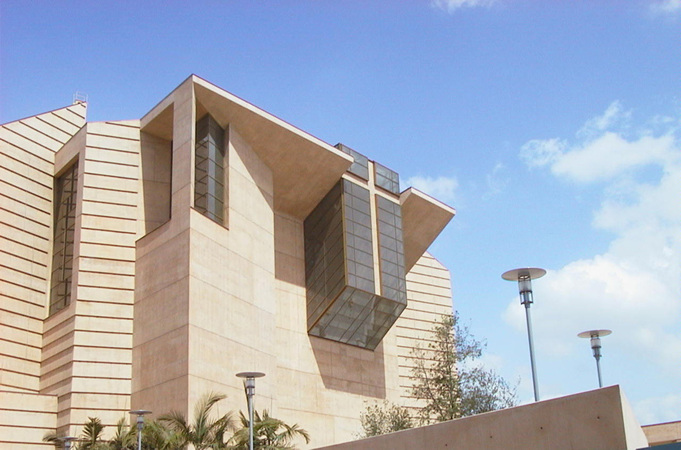
Cathedral of Our Lady of the Angels.
Our Cathedral is a living
sign of the Church’s mission to evangelize — to proclaim the good
news of Jesus Christ and his Kingdom — in the heart of our city and our world.[ii]
The Church exists to
evangelize. The Church belongs to Jesus and he gave her only one mission, the
salvation of souls: “Go therefore and make disciples of all nations, baptizing
them in the name of the Father and of the Son and of the Holy Spirit, teaching
them to observe all that I have commanded you; and lo, I am with you always, to
the close of the age.”[iii]
The Church’s mission is
ever ancient and ever new. And all of us in the Church — bishops, priests and deacons;
religious and consecrated men and women; seminarians and lay people in every
walk of life — we all have responsibility for this mission.
3. That is why I am writing this
pastoral letter to you in this moment of grace. You
have become dear to my heart — as my beloved brothers and sisters in Christ and
my co-workers in the mission of evangelization that he calls us to.
I
have spent much of these last two and a half years trying to get to know as
many of you as I can. What a blessing it has been to travel this vast and
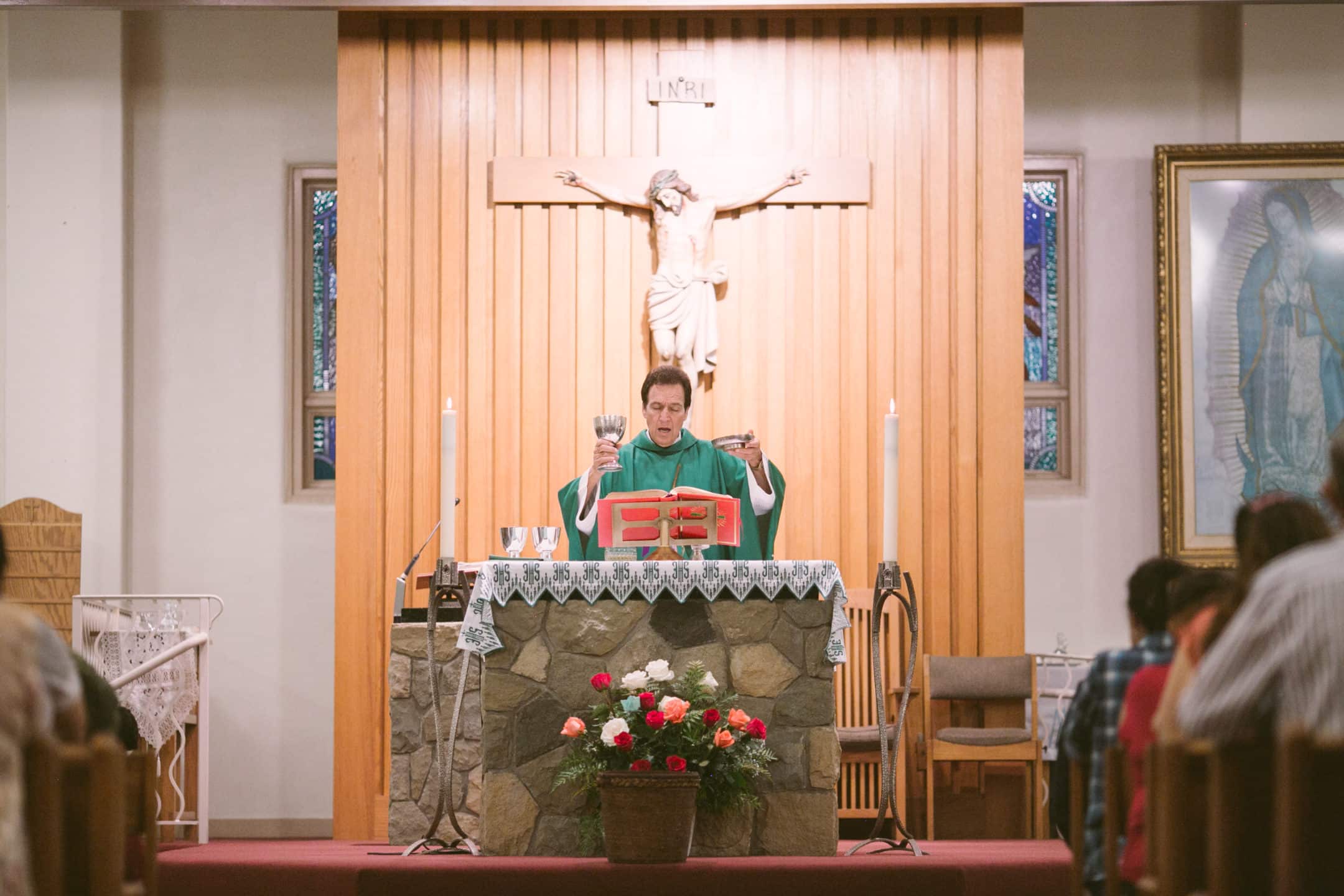
beautiful territory of the Archdiocese to visit your families and parishes. These moments when I have had the chance to offer the Eucharist for
you or the chance to celebrate the Sacrament of Confirmation for your children
— these have been a joy in my life and ministry.
My brothers and sisters,
I am humbled by your beautiful witness to our Catholic faith in your ministries
and in your daily lives. Your generous love for God and our neighbors inspires
me and gives me hope.
The
family that God has gathered here in the Archdiocese of Los Angeles is special.
Our
Church is alive — youthful, vibrant and growing. The Gospel has borne much
fruit here. Today we are our nation’s largest and most diverse local Church.
God continues to give us growth, as we are baptizing tens of thousands of
children each year.
We
are a living picture of what our Father created his Church to be — una familia de Dios, one family of God with sons and daughters drawn from
every nation, race, people and language.[iv]
Our Church is the heart and soul of
our secular city, pointing our neighbors to God and protecting the sanctity of
the human person through all our works of education and advocacy and caring for
those in need.
top of page
A Year of Faith
4. I have come to see that our local Church has a unique role
to play in leading the new evangelization of our country and our continent. And
because we have this special responsibility, we must make the most of this new
moment of grace that is being given to us.
We are about to begin a
“Year of Faith” proclaimed by our Holy Father Pope Benedict XVI.
The Year of Faith will
start on October 11, 2012, to mark the fiftieth anniversary of the opening of
the Second Vatican Council. It will continue until November 24, 2013, the Solemnity
of Our Lord Jesus Christ, King of the Universe.
I see this Year of Faith
as a beautiful opportunity for our family of God in Los Angeles to deepen our
conversion in faith to Jesus Christ and to rediscover our missionary call as
his disciples.
As our Holy Father has written:
“Today as in the past, [Christ] sends us through the highways of the world to
proclaim his Gospel to all the peoples of the earth. … Today too, there is a
need for stronger ecclesial
commitment to new
evangelization in order to rediscover the joy of believing and the enthusiasm
for communicating the faith.”[v]
5. My brothers and sisters, we must make this Year of Faith a
time to renew the love we had at first for Jesus Christ![vi] Now is the
time for us to strive to attain full maturity in our Catholic identity and our
vocation as children of God. Now is the time for us to grow in our love for the
Church and in our loyalty to her mission.[vii]
And now is the time for
this local Church to find fresh passion for our spiritual and pastoral mission.
The stronger ecclesial commitment that our Holy Father is calling us to means that all of us must assume
new responsibility for the Christian mission to our nation and our continent.
Our local Church was born
out of the Church’s mission to the nations and the first evangelization of the
Americas. We need to reclaim our missionary history! And we need to recognize
that this missionary heritage comes to us today as both a gift and a duty.
top of page
Reclaiming our Missionary History
6. For the first
evangelists of the Americas, these continents were the New World that Jesus had
taught his followers to hope for.[viii] So with
a zeal for souls, they came from Spain to Mexico and from there they traveled
all over this beautiful new world, proclaiming the good news of Jesus Christ.
America’s first
missionaries named this land’s rivers, mountains, forests and cities for the
saints and mysteries of the Catholic Church. They learned local languages and
customs and they sowed the seeds of the Gospel to create a rich Christian
civilization — expressed in poems and plays, paintings and statues, songs,
prayers, devotions, architecture and even laws and policies.
The Church’s mission to
California, led by the great Franciscan
priest Blessed Junípero Serra, built churches up and
down the long coastal road they called the King’s Highway, El Camino
Real.
Along this road, our
great city was established. It was first called El Pueblo de Nuestra
Señora de Los Angeles — named for the angels of
God and the Blessed Mother of Jesus Christ, who is the Queen of all the angels
in heaven.
7. Los Angeles — like all of California and the Americas — is built on a Christian foundation. And today
we are called to build on that missionary foundation to make a new
evangelization of the Americas.
The original El Camino Real passed by not far from where our Cathedral is located, running
alongside what nowadays we know as U.S. Route 101 or “The Hollywood Freeway.”
The cross on the top of our
Cathedral, which tens of thousands see every day as they ride this freeway, is
a sign that the Christian mission to Los Angeles and the Americas
continues in our day —
even as the City of the Angels has become a highly diversified and secularized
metropolis that drives technological innovations and shapes opinions, fashions
and culture for the whole world.
top of page
Our Vocation as the Archdiocese of Los Angeles
8. Our vocation as the Archdiocese of Los
Angeles is to continue and fulfill Christ’s mission to the New World.
We need to embrace this Year of Faith as a time of interior renewal and spiritual preparation for a new
Christian witness to our city and our continent.
In this spirit, our Archdiocesan
Pastoral Council has proposed a series of practical goals and objectives to
help us to grow in our faith and knowledge of the Gospel. The Council’s
proposals, which will be published in the weeks to come, coincide with its
final reports and recommendations on implementing the Archdiocesan Synod of2003.
The Synod has been a
source of grace for our Archdiocese. And its vision has helped me as I have
been praying and reflecting on what our pastoral priorities should be in the
years ahead.
Thanks to the Synod’s
vision and the Pastoral Council’s continued dedication, we are able to see more
clearly that our local Church has this special vocation to the new
evangelization.
So this Year of Faith
should be a time for growing in our knowledge of the gift of God we have been
given. It should be a time for us to become better equipped to live the calling
we have received and to bear witness to the hope we have in Jesus.[ix]
And this Year of Faith must be a moment of renewal of faith for each one of us
and for our Archdiocese — for our parishes and schools; for our catechesis and
religious education programs; for our social ministries!
My
brothers and sisters, I firmly believe that our Archdiocesan family has entered
a new moment of grace.
In addition to our
Cathedral’s tenth anniversary, we have also just celebrated the twenty-fifth
anniversary of Blessed Pope John Paul II’s pastoral visit to Los Angeles, on
September 15–16, 1987.
This visit was a
beautiful blessing and continues to be a font of grace for this Archdiocese. So
I invoke Blessed John Paul’s intercession for our local Church and for each one
of us in this Year of Faith.
top of page
Priorities for the New Evangelization
Blessed John Paul called
the Church to a “new evangelization — new in its ardor, methods and
expression.”[x]
Our task is to take up his call. We must find new ways and new enthusiasm to
evangelize — in our families, our work, and in every ministry of our Church.
In that spirit, I want to suggest some basic directions and initiatives so
that we can make the most of this year of renewal. I want to do that by
recalling the five pastoral priorities that I set out at the beginning of my ministry.
These
priorities reflect our communion — with the bishops of
California and the United States, with our Holy Father Pope Benedict XVI, and
with the whole universal Church. They
also reflect our Archdiocesan Synod’s goals of promoting
faith education, sacramental life, social justice, evangelization, collegial
leadership, and a greater sense of responsibility in ministry.
In this Year of Faith, I believe these five priorities can serve as a useful
framework for focusing our efforts at renewal.
9. My first pastoral priority is education in
the faith.
No matter who we are or what point we are at in our faith journey, all
of us need to grow in our knowledge of the faith. So let us make this Year of
Faith a time for really learning what we believe as Catholics and why we believe these things. Let us
also learn what difference these beliefs
should make in our lives and in our world.
In concrete terms, let us
make this a year for learning how to pray better and read the Gospels with more
lively faith and deeper understanding. I highly recommend that we commit
ourselves to learning the ancient Catholic practice of lectio divina, in which our reading of the sacred text becomes a personal encounter
with Jesus Christ, the living Word of God, who challenges and guides our lives.[xi]
I also hope that we will
all make this the year when we begin the habit of life-long learning in our
faith.
A good place to begin is to study
the teachings of the Second Vatican Council (1962–1965), especially as they are
expressed in the Catechism
of the Catholic Church and in the Compendium
of the Social Doctrine of the Church. We need to listen to what the
Spirit is still saying to the Church today through the Council.[xii]
For me, Vatican II’s most important
insight was to recover the Gospel teaching of the universal call to holiness —
that we are all called to
be saints.[xiii] The Council taught a vision of faith that embraces all of
life. The Council reminded us that we are all called to be transformed by grace
into the image of Jesus Christ and that we are all called to work with his
grace to transform our world in the image of the Kingdom of God.
This is the vision of faith that is
necessary if we are to be credible witnesses for the new evangelization in our
globalized society. So in this Year of Faith, we need to deepen our
understanding of the Council’s vision. We need to make that vision the
foundation for our witness to our city, our country and our world.
top of page
The Lay Vocation To Be Eucharistic People
I pray that this Year of Faith will
be the year when lay people rediscover their vocation to proclaim the Gospel in the
middle of the world — in their homes, in the economy, in the places where they
work, and in all their political and civic duties.
Dear lay people: the
faith you profess on Sundays must be lived out in the world during the rest of
the week! You are called to sanctify your work. That means you need to see your
daily activities as the place where you meet and walk with Jesus, seeking
holiness and the Father’s will.
Each of you has a part to play in building
up this earthly city in light of the Kingdom of God. Together we have to fill
our society with the values of the Gospel — the values of
truth, justice, solidarity and freedom.
Education in the faith must lead to
a more intense practice of the faith. We should want to know our faith better
so that we can live it more fully, with greater love and devotion.
That is why education in the faith
— like everything else in the Church — must be rooted in the mystery of the
Eucharist. We have to live the Mass! That is the goal of
education in the faith — that we become Eucharistic people, living with the awareness that we all have a priestly soul.[xiv]
As Jesus Christ offered
his Body and Blood for us on the cross, and as he renews his sacrifice in every
Eucharist, we are called to live in imitation of him.
We are called to work
with the graces we receive in the Eucharist and to make our lives something
beautiful that we offer to God. We are called to make our lives a prayer — a
gift that we offer in love for the glory of God’s name and for the salvation of
our brothers and sisters.[xv]
top of page
Building the Family of God
10. My second priority is to promote
vocations to the priesthood and to religious and consecrated life.
Our Church always needs more
men and women who can testify to the radical beauty of a life given totally to
Jesus Christ. In this Year of Faith, I believe we need to focus especially on
vocations to the priesthood.
The priesthood is a gift
and a mystery in God’s plan for the salvation of the world. The priest makes Christ present in the
world. Through his
priests, Christ speaks his words of forgiveness. Through his priests, he offers his
Body and Blood as the bread of life for the life of the world.[xvi]
Jesus said, “He who has seen me has seen the Father.”[xvii]
Through the ministry of the priest, we have Jesus. And through the spiritual
fatherhood of the priest, the men and women of the world today can see and love
their heavenly Father.
Vocations are born of a
Catholic culture. And this Year of Faith should be a time in which we find new
energy to support our priests and seminarians and to build this culture of
vocations. One practical step we can take is to intensify our prayer as the
family of God.
What a difference it would make if every Catholic and every parish were
dedicated to praying every day for our priests and for new vocations! Imagine
the graces that would flow, if many of us would commit ourselves to regular
adoration of the Eucharist and holy hours to pray for vocations!
11. My third priority is to foster our
universal Catholic identity and cultural diversity.
The encounter with Jesus
Christ and his Gospel in Los Angeles has led to a rich communion among diverse
indigenous and immigrant cultures. We are uniquely placed at the crossroads of
continents — uniting North and South America and opening the Americas to the
Caribbean and to Asia and Oceania.
So our local Church will
always be shaped by the energies and faith of new peoples from all over the
world. In turn, we must make sure that our Church is
always a sign of the family of God. The family of God in Los Angeles must
always be a sign that God is with us, and that in his loving eyes
no one is a stranger to him and we are all brothers and sisters.
In this Year of Faith,
let us take a simple practical step to build our sense of communion as the
family of God.
We are a family with
brothers and sisters drawn from dozens of different ethnic traditions — each
with our own particular prayers, devotions, customs and patron
saints. Let us begin to try to learn from
one another’s traditions. And let us look for ways that we can celebrate and
share this rich treasury of Catholic pieties and spiritualities
with the people of our time.
top of page
Proclaiming the Culture of Life
12. My fourth priority is that we proclaim the
Gospel of life and promote a culture of life in our society.
As a Church, we are
entrusted with the good news of Jesus Christ — that the human person is sacred and
created in the image of God. That is why we fight for the rights of the person
from conception to natural death. That is why we strive for justice for the
immigrant and the worker, for the imprisoned, the hungry, and the homeless.
That is why we defend the rights of the old and the sick to be cared for with
love and compassion.
In this Year of Faith, I
want to give concrete expression to our witness by expanding the mission of our
Archdiocesan Office of Justice and Peace. We will give the office a new name —
the Office of Life, Justice and Peace — and we will include within its mission
the work of defending innocent life against the threats of abortion and
euthanasia.
This move will strengthen
every aspect of our Archdiocese’s vital social mission — from our many works of
charity and service, to our efforts to seek justice for immigrants, workers,
the imprisoned, and the poor. This change will also advance our efforts to
build a culture of life — because it will demonstrate our belief that the right
to life is the foundation of every other right and liberty and the true
foundation of justice and peace in society.
In this Year of Faith,
each of us must rediscover the importance of the Church’s social doctrine and
our personal duty as Christians to work for justice and the common good. Our
love for Christ demands that we build a society that is more worthy of the
dignity of the human person made in the image of God.[xviii]
Again, I recommend that
in this Year of Faith, we begin a practical study of the Compendium of the Social
Doctrine of the Church in our parishes and in our homes.
In Jesus Christ, the love
of neighbor and the love of God become one. The Christ who comes to us in the
Eucharist is the Christ who comes to us always in his most distressing guise —
in the poor, the stranger, the immigrant, the prisoner, the unborn. The One who
says “This is my Body” also tells us, “As you did it to one of the least of my
brethren, you did it to me.”[xix]
This identification of
Jesus with the poor and vulnerable is one of the beautiful truths revealed in
our religion. In the least of our brothers and sisters, we find Jesus. And when
we find Jesus, we find God.
The Church’s works of
charity and justice are an essential dimension of the new evangelization.
Through our love for others, we bear witness to the reality of our God who is
love. Through our work to make this a society of truth and love, we make God’s
love for all men and women a reality in our world.
13. My fifth priority is to defend and
strengthen marriage and the family based on the permanent
and exclusive union of one man and one woman.
Our Church must lead a cultural renewal so that our society
will once more see that marriage is sacred and that the
family is the true sanctuary of life and the heart of a civilization of love.
We need to do everything
we can to restore a “family culture” in our society. That means defending
marriage in the face of widespread cultural confusion. That means doing more in
our parishes and ministries to support mothers and fathers and families. That
means talking to our children, from a very young age, about the beauty and the
meaning of marriage and family.
In this Year of Faith,
let us deepen our understanding that the Gospel is the good news of God’s
“family plan” for history. That is why our Father sent his only Son to be born
of his Spirit in a mother’s womb and to be raised in a family with a mother and
a father. We need to deepen our awareness that we are children of God and that
our Father calls us to live as brothers and sisters in his family, the Church.
top of page
Returning to God by Way of Witnesses
14. As a sign of our commitment to the new evangelization, in this Year of Faith, I want to establish a new Archdiocesan Office of
the New Evangelization. This new office will be responsible for establishing
and coordinating our initiatives to spread the Gospel and to increase
Catholics’ knowledge and love of their faith.
This Year of Faith should
be a time in which we examine every area of pastoral life in our great
Archdiocese — in our parishes and in all of our ministries. We need to ask
ourselves: Is our work leading men and women to Jesus Christ and his Church? Is
the Christian faith spreading and is knowledge of the faith deepening through
our programs and ministries?
Everything we do must be
measured by what it contributes to proclaiming Jesus Christ to the men and
women of our day!
15. My dear brothers and
sisters, it is time for us to become aware that in God’s plan of salvation this
local Church has a historic vocation. It is time for us to answer our calling
to be co-workers with Jesus Christ — to play our part in the great story of
salvation that God is writing in the history of the nations.[xx]
Now is the time for each
of us to get back to what really matters. The new evangelization must begin in
your hearts and in mine. We all need a new conversion. Because
only the converted heart can lead other hearts to conversion.
Conversion to Jesus
Christ is not a single moment or event in our lives. The encounter with Jesus
Christ is the beginning of a faith journey. Our relationship with Jesus Christ
requires a daily decision to turn our hearts to him, to follow him and imitate
him, to get to know him every day in a more intimate way. Conversion is the
work of our lifetimes.
In
every age and every place, believers have the duty to proclaim the Gospel. The faith we have received, we are called to pass on to others. The
love of God we know, we are called to share with others. This is the most basic
identity and responsibility of every Catholic. In our times, our Catholic
calling to holiness and mission takes on new urgency.
Our world will return to God — but not by way of
words and programs, no matter how eloquent or well conceived.
Our world will return to God only by way of witnesses
— by way of men and women who
testify by the example of their lives that Jesus Christ is real and that his
Gospel is the path to true happiness.
Jesus is calling us to be
those witnesses, my brothers and sisters.
top of page
The Bright Star of the New Evangelization
16. Our world is waiting for a new
evangelization!
That
is why, in marking the tenth anniversary of our Cathedral, we also consecrated
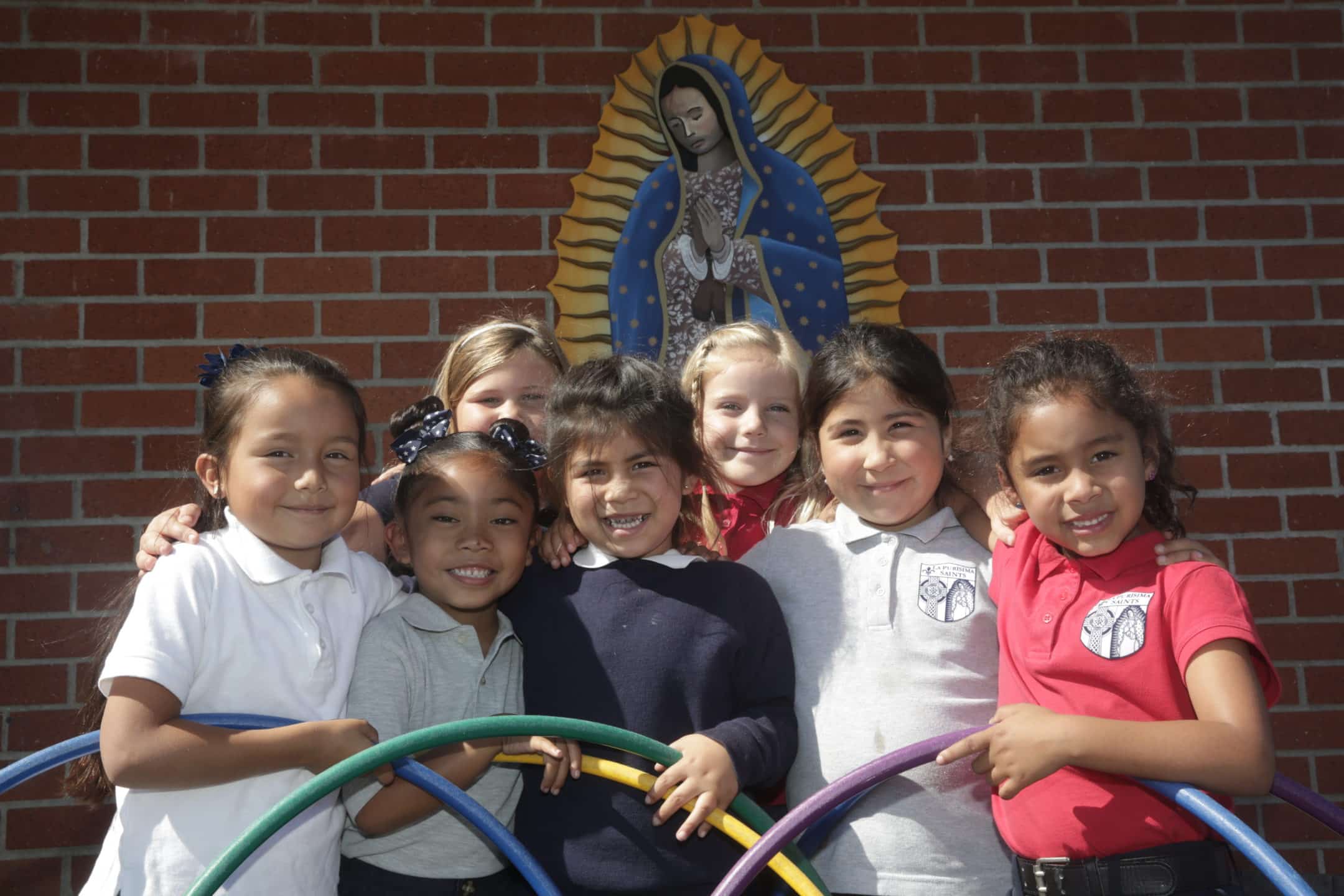
a beautiful new chapel to honor Our Lady of Guadalupe. This new chapel contains a precious relic from the miraculous tilma that bears the image of Our Lady of
Guadalupe.
This relic has a special
meaning for me. Already, at the base of the main altar in our Cathedral, there is
a small marble box that contains the relics of twenty-six martyrs and saints
from every continent and every period in the history of the Church’s mission to
the nations. This new relic in our new chapel is a sign to me — and I hope it
will be a sign to all of us — that Our Lady of Guadalupe was sent by God to be
the bright star at the dawn of the first evangelization of the New World.
When our Blessed Mother
appeared to St. Juan Diego outside Mexico City in 1531, it was only a
generation after Christopher Columbus and his voyages of discovery. Our Lady’s
coming inspired a generation of Catholic missionaries — priests, deacons,
religious, and lay people. Within decades, they spread faith in Jesus Christ
throughout South America and North America, the Caribbean, the Philippines, and
deeper into the countries of Asia and Oceania.
So as I conclude this, my
first pastoral letter to you, I am asking for Our Lady of Guadalupe’s prayers
and intercession. I pray that this new chapel will remind us that Mary our Blessed
Mother is always with us as the bright star of the new evangelization. May she
inspire us and guide us to fulfill our vocation — to be the new generation of
missionaries to our city and our world.
In
God’s providence, the Year of Faith will conclude on the 300th anniversary of
the birth of the great missionary to California, Blessed Junípero Serra, who was born November 24, 1713.
So let us embrace this
new moment of grace for our Archdiocese with the zeal and courage of Padre
Serra and the first evangelists of the Americas.
Through our witness, let
us make this truly a City of the Angels — a city of love and truth, where all
can know that God is near in his love, and where the horizons of every life are
open to his promise of salvation.
Through the intercession
of Our Lady of the Angels, patroness of this great and historic Archdiocese,
let us commit ourselves to building on their missionary foundations. By the
witness of our lives, let us make America once more a New World of faith!
Given in Los Angeles, at the Cathedral
of Our Lady of the Angels, on October 2, 2012,
the Memorial of the Guardian Angels, in my second
year as Archbishop of Los Angeles.
Most Rev. José H. Gomez
Archbishop of Los Angeles