The Rites
The Catholic Church offers distinct occasions for common prayer at the
time of funerals. The Order of Christian Funerals contains three clusters
of Rites:
- The Vigil
- The Funeral Liturgy, and Final Commendation and Farewell
- The Rite of Committal
The Funeral Rites also provide other opportunities for prayer. These
Related Rites and Prayers are: Prayers after Death, Gathering in the
Presence of the Body, and Transfer of the Body to the Church or to the
Place of Committal.
The Funeral Rites, like all the Church's liturgy, are primarily worship
of God. Care needs to be taken to preserve the integrity of the Church's
prayer, and of the homily, while remaining personable and sensitive to
those present.
The Rites for adults are different from the Rites for children and infants.
These Rites apply to baptized Catholics, and also catechumens, unbaptized
infants, and in special circumstances, those who are not Catholic.
By family preference or pastoral concern, any single rite may be used
as the sole Funeral Rite. Consultation with your priest or parish minister
can help determine your funeral selections.
The Vigil
This Rite, presided over by a priest, deacon, or prepared layperson
(or member of the family) generally consists of: Introductory Rite, Liturgy
of the Word, Intercessory Prayer and Concluding Rite and Blessing. Also
strongly recommended is the Office of the Dead from the Liturgy of the
Hours.
The rosary, or a portion of it, may be included as part of the petitions
within this Rite, or preferably, it may be recited by the family at a
time other than the Vigil. If the Vigil is celebrated in church, it begins
with the Rite of Reception.
The Funeral Liturgy
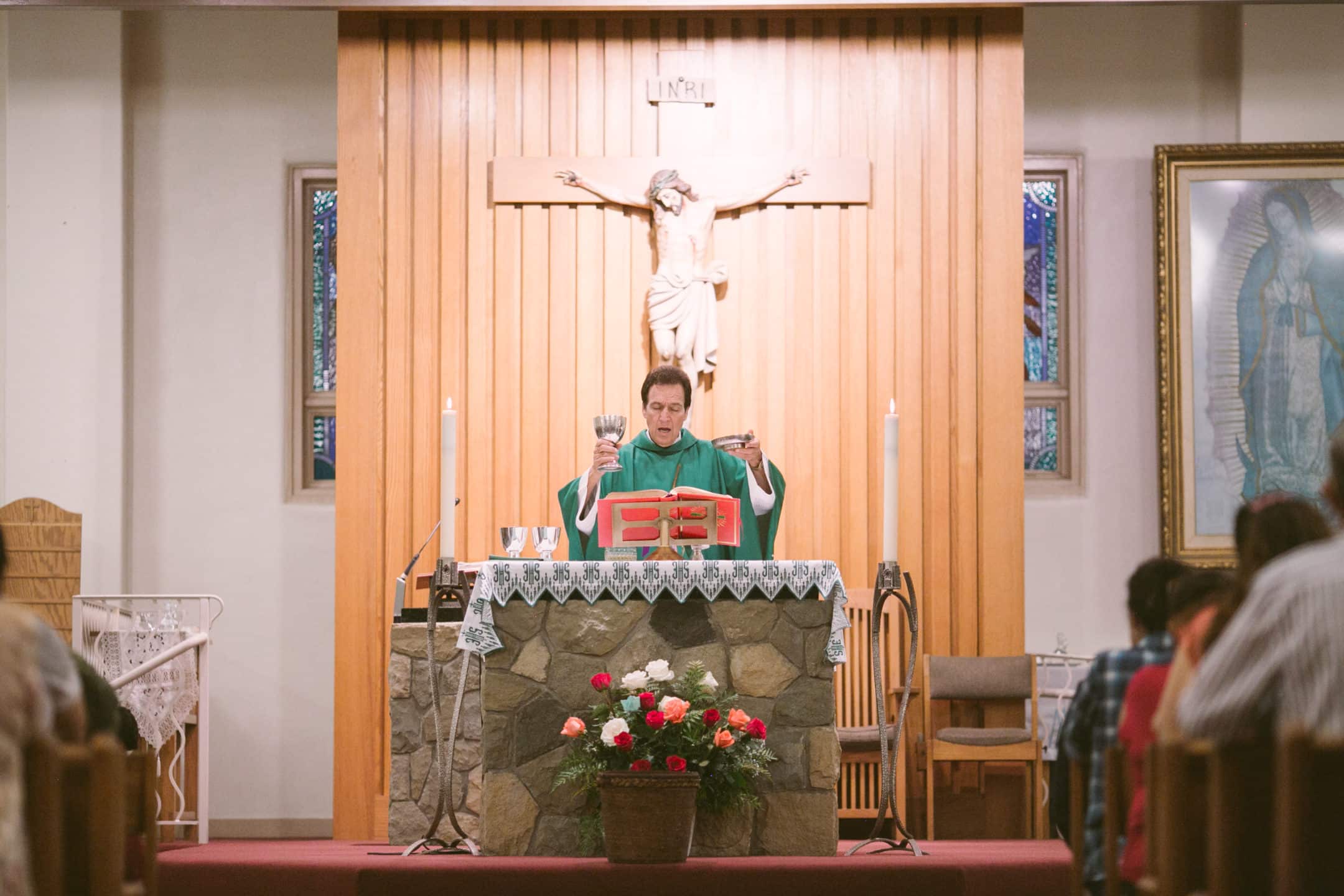
The Funeral Liturgy (Mass) is the community's principal celebration.
Generally, the Funeral Liturgy comprises: The Rite of Reception (unless
already celebrated as part of the Vigil), the Liturgy of the Word, The
Liturgy of the Eucharist, and the Final Commendation and Farewell.
The priest presides at Mass, assisted by a full complement of liturgical
ministers - lectors, canto, musicians, servers, etc. These ministerial
roles are performed by trained parish ministers or by members of the
deceased's family or friends, if properly prepared.
The Funeral Liturgy Outside of Mass
In special circumstances, such as the absence of the body of the deceased
(because of cremation, burial elsewhere, etc.) or if those participating
are not Catholic, the Funeral Liturgy outside of Mass may be a more suitable
form of celebration. In this case the Rite of Committal at the cemetery
may take place at a later time.
A deacon or lay person may preside at a Funeral Liturgy outside of Mass
which may be chosen for a variety of reasons.
The Rite of Committal
The Rite of Committal, the final of the Funeral Rites, may be presided
over by priest, deacon or layperson. It is best celebrated in close proximity
to the actual burial place - grave, tomb or crematorium.
This rite is intentionally brief. However, if this is the sole Funeral
Rite, it may be expanded to include the Rite of Final Commendation or
additional music and readings, a brief homily, and petitions.
What Should I Do When a Loved One Dies?
When death occurs, after you provide for the initial care of the body
of the deceased, the parish should be contacted first.
Who Should Be Involved in Funeral Preparation?
Family members and close friends of the deceased are encouraged to have
an active role in preparing and choosing the elements of the Funeral
Rite. If possible, with preparation, they may preside at designated Rites
or perform some ministerial roles.
Today individuals and families often plan the funeral before a person's
death. Such preplanning can have the effect of helping families face
the reality of death with Christian hope. It can also help relieve the
family of numerous details after the death and may allow them to benefit
more fully from the celebration of the Funeral Rites.
Is Cremation Allowed?
Although traditional burial procedure which reflects respect for the
body is still normal Catholic practice, cremation is allowed by the Catholic
Church for justifiable reasons. Cremation would ordinarily take place
after the Funeral Liturgy. These remains should never be scattered or
handled in a undignified manner, but are to be interred or inurned in
a cemetery columbarium.