Introduction
Altar Servers are part of a very ancient tradition in the liturgical
life of the church.
Within the Archdiocese of Los Angeles, in accord with permission given
by the Holy See, both men and women, some younger some older, may function
as servers of Word and Sacrament. These Archdiocesan Guidelines are meant
to benefit those responsible for implementing the Ministry of Server,
providing helpful direction while allowing for appropriate pastoral discretion.
On the pastoral level it is most important that this ministry continue
to be encouraged. Pastors should see to it that this ministry reflects
the parish and that there is an appropriate balance of male and female
servers. Pastors are reminded, especially in the recruitment and training
of younger servers, that this ministry has in the past been a source
of priestly and religious vocations. It could once more be the starting
point for a young man to begin thinking about the priesthood or a young
woman to develop an interest and love for the religious life.
Requirements
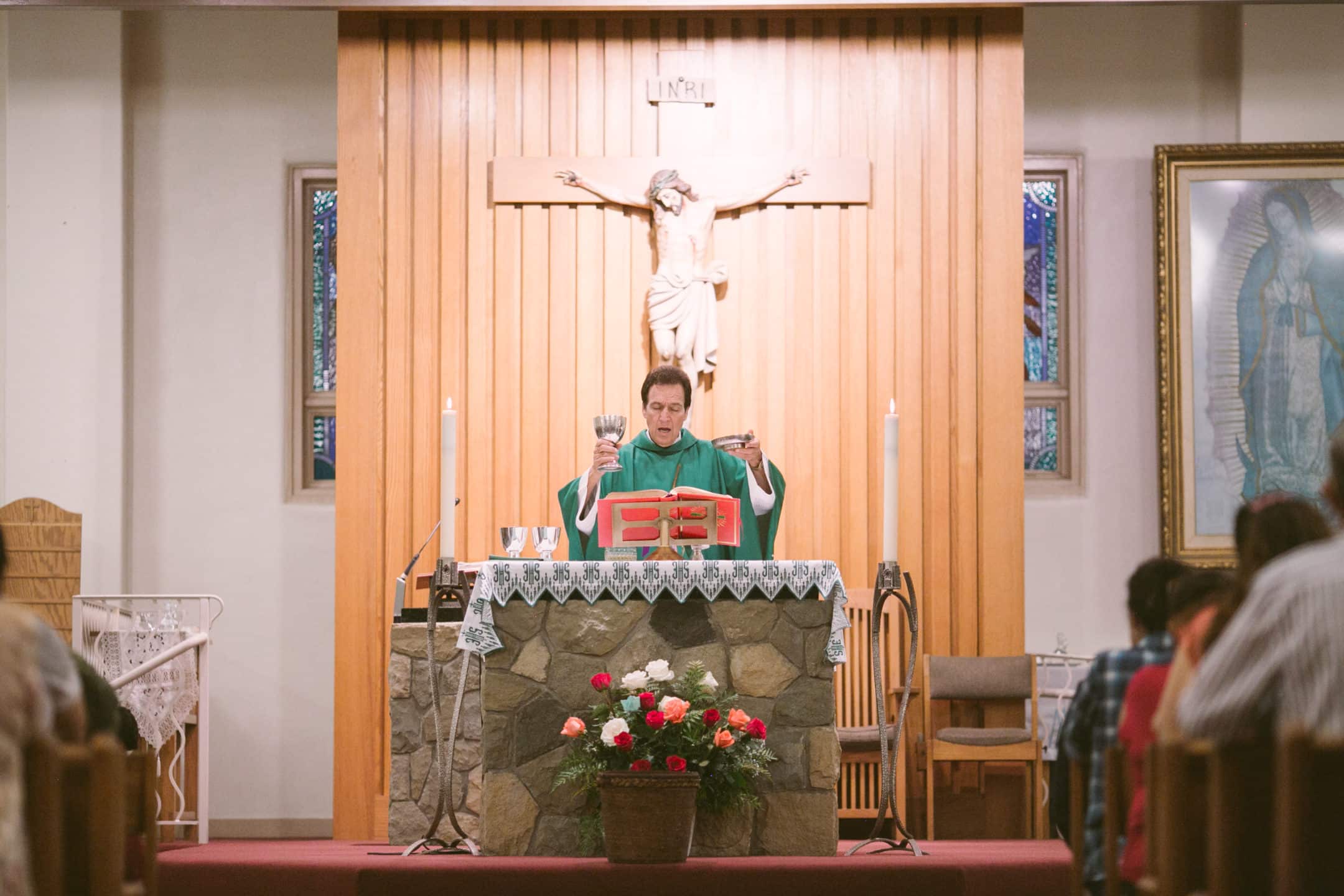
The server is a member of the assembly who assists the priest and deacon
during the Eucharist and other liturgical ceremonies so that the liturgy
can be conducted with grace and reverence. Servers should be active and
full participants in the celebration with the understanding that they
are first and foremost members of the assembly. The server expresses
this by singing, praying and keeping silence along with the rest of the
assembly.
Ideally, servers are fully initiated Catholics. Altar servers must
have received the Sacraments of Baptism and Eucharist; youths who have
not been confirmed may serve. Servers normally receive the Eucharist
whenever they participate in the liturgy. The minimum age and scheduling
procedures are left to the pastor’s discretion. Recommended minimum
age for youth is roughly the fifth grade.
Servers are expected to be appropriately prepared, committed to giving
their time and talent to their parish community, and willing to serve
God’s people. They should be able to understand the Eucharistic
celebration and the other sacred rites.
Responsibilities
Servers carry the cross and the processional candles. They hold the
book for the priest celebrant when he is not at the altar. They carry
the incense and censer and present the bread and wine along with the
water to the priest during the preparation of the gifts or assist him
when he receives the gifts from the people. Servers wash the hands of
the priest, and assist the priest and deacon as necessary. In the absence
of a sacristan, the servers may prepare the altar and sacred vessels
before Mass.
The number of servers varies according to the nature of the celebration.
Since the tasks of the server can vary depending upon local circumstances,
it is important that the pastor develop a Ministry Description for Servers
so that they will be aware of their role and their responsibilities.
Training
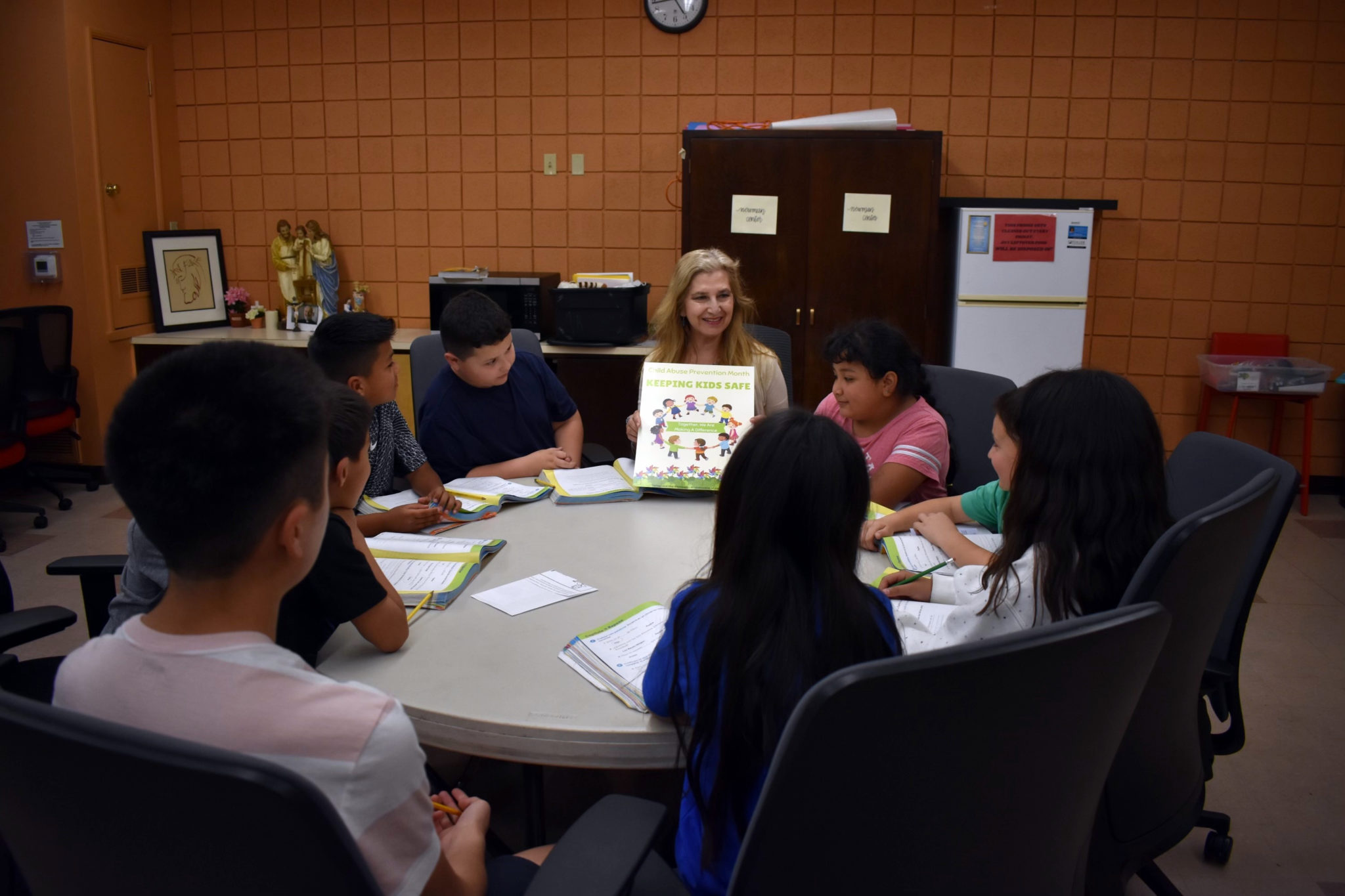
As with other ministries, the ministry of server requires individuals
to be trained so they can conduct themselves appropriately. The training
needs to be adapted to the educational level of those who are participating,
but at a minimum should include exposure to the following areas:
- Ministry to the Assembly
- a general introduction
- the meaning of service
- types of ministries
- The Eucharist––sense of its theology and structure
- Names and descriptions of books, vessels, vestments, locations, the
seasons of the year and their importance, the vocabulary of liturgy
- Procedures
- Before the liturgy: what are the expectations and responsibilities
of the server when arriving for liturgy? Arrival time?
- During a liturgy: posture and deportment, order of processions,
the Introductory Rites, the Liturgy of the Word, the Liturgy
of the Eucharist, and the Concluding Rite?
- Following a liturgy: what are the responsibilities of the server
in the sacristy and in the worship space?
- Other liturgies––Morning and Evening Prayer, Weddings,
Funerals, Baptisms, Quinceañeras, Confirmation, etc.
It is recommended that a team be formed at the discretion of the pastor
to oversee and provide for the training, formation and scheduling of
youth altar servers. This team could include parents, deacons, sacristans
and liturgy committee members, both male and female.
A significant responsibility of this leadership group is to model a
sense of Church and ministry to the children. This modeling includes
participation as full members of the assembly – responding to the
prayers and dialogues of the liturgy and joining in the singing of hymns
and acclamations.
Vesture and Position of the Server
Adult Servers should dress with decorum befitting the celebration of
Eucharist. A professional style of dress is appropriate, or an alb may
be worn. If both adult and youth are serving at the same liturgy all
should wear similar attire appropriate to this ministry.
Youth Servers should vest in albs or cassock and surplice. Whichever
is chosen, there should be an ample supply of sizes to insure all servers
are properly vested in the same way at any given liturgy. At all celebrations,
servers should be neat, clean and simply dressed.
Servers should be seated in a place from which they can assist the celebrant
and deacon with ease. The place next to the priest is normally reserved
for the deacon.
Conclusion
Serving in the church is a special privilege. It allows us to be close
to the altar, to carry the cross, to carry the light of Chr ist, to wear
the robe of baptism, to hold the book of the prayers – and to swing
the thing that makes the smoke (the thurible)! How wonderful this is!
(Philippart, Serve God with Gladness, 2)
Bibliography
Kwatera, OSB, Michael. The Ministry of Servers. The Liturgical Press:
Collegeville, MN, 1982.
The Liturgy Documents, 4th edition. Liturgy Training Publications: Chicago,
IL, 2004.
Nevins, MM, Rev. Albert J. Called to Serve: A Guidebook
for Altar Servers.
Our Sunday Visitor: Huntington, IN, 1981.
Philippart, David. Serve God with Gladness. Liturgy Training Publications:
Chicago, IL 1998.
Ryan, G. Thomas. The Sacristy Manual. Liturgy Training Publications:
Chicago, IL, 1993.
Order for the Blessing of Altar Servers
Order of Blessing Within Mass
1852 After the gospel reading, the celebrant in the homily, based on
the sacred text and pertinent to the particular place and the people
involved, explains the meaning of the celebration.
General Intercessions
1853 The general intercessions follow, either in the form usual at
Mass or in the form provided here. The celebrant concludes the intercessions
with the prayer of blessing. From the following intentions, those best
for the occasion may be used or adapted, or other intentions that apply
to the particular circumstances may be composed.
The celebrant says:
God provides the Church with suitable ministers to assist in divine
worship. Let us pray for these new liturgical ministers, that God may
bless them as they undertake their new roles of service to this parish.
R. Lord, hear our prayer. or R. Lord, graciously hear us.
Assisting minister:
For the Church of Christ and for this parish of N., that all Christians
may offer themselves as living sacrifices, we pray to the Lord. R.
Assisting minister:
For all the liturgical ministers of our parish, that they may deepen
their commitment to serve God and their neighbor, we pray to the Lord.
R.
Assisting minister:
For these altar servers, that the light of Christ may shine in their
hearts, we pray to the Lord. R.
Prayer of Blessing
1854 With hands extended over the new ministers the celebrant says
immediately:
God of glory,
your beloved Son has shown us
that true worship comes from humble and contrite hearts.
Bless our brothers and sisters,
who have responded to the needs of our parish
and wish to commit themselves to your service as altar servers.
Grant that their ministry may be fruitful and our worship pleasing in your
sight.
We ask this through Christ our Lord.
R. Amen.
Reprinted from the Book of Blessings, © 1989 by Catholic Book Publishing
Co., NY. All rights reserved. Used with permission.